Inside a Dark Victorian Home in Glasgow
One might argue with “every cloud has a silver lining” — but for the woman at the heart of this film, that’s exactly how it played out.

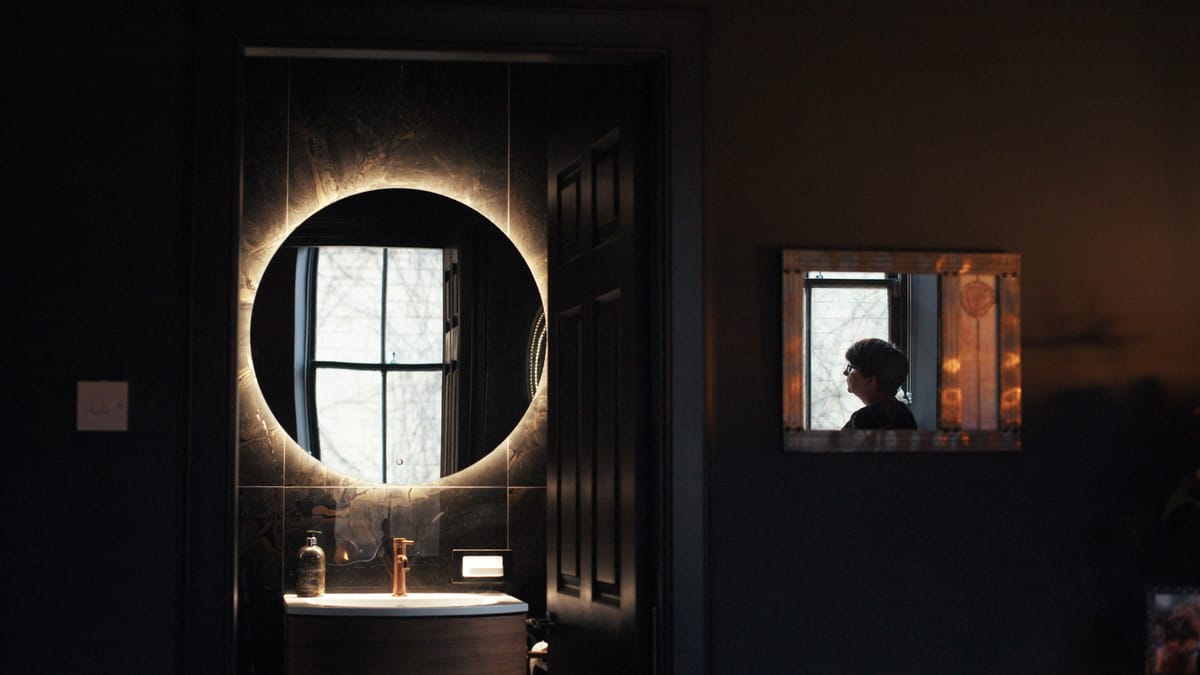
It was 2020. The house — a converted servants’ quarters in Glasgow’s West End, dark by nature and dirty magnolia by previous owners’ choice — had become the place she spent most of her time. So she started painting it.
Anne Marie wasn’t looking for a new career, a creative identity, or a community of thousands. She was looking for something to take her mind off her illness and being stuck indoors.
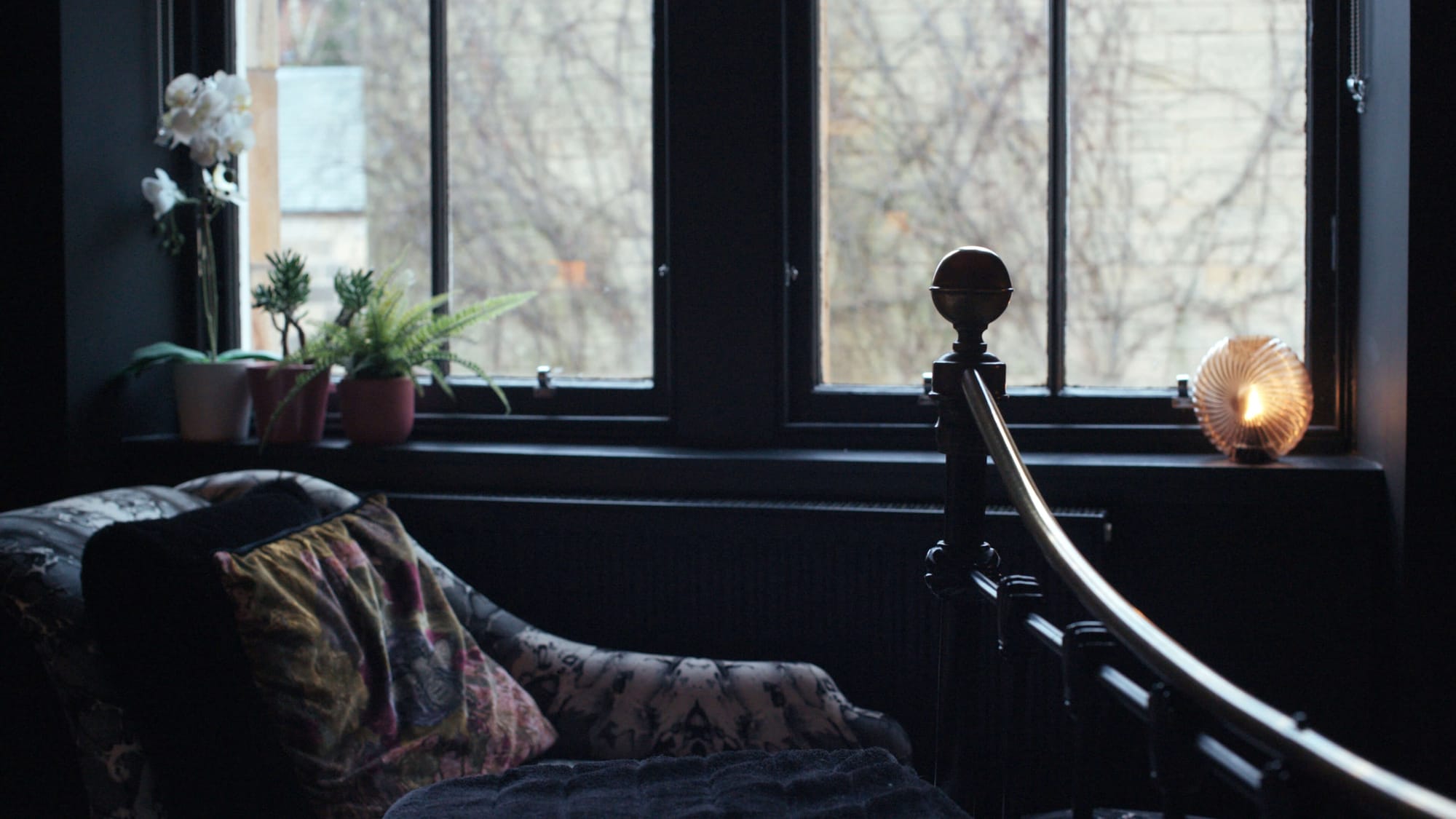
“I mistakenly thought that to deal with the darkness I had to paint everything white,” she says. “I painted the whole hall white and it looked like a very depressing hospital corridor. So then I realised that actually I really had to embrace the darkness.”
What followed was something she couldn’t have planned: a house transformed into one of the most distinctive interiors in the city.
And alongside it, a whole new life.
In Their Own Words: Anne Marie on Embracing Darkness and Finding Colour in Life
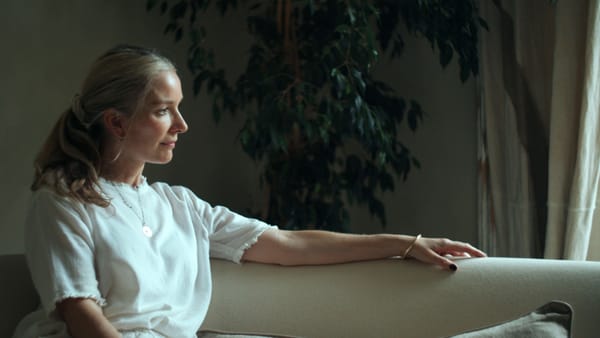
My name is Anne Marie, and I live in Glasgow. Until relatively recently I was in a full-time legal career, and then I retired. Now I’m very much involved in the homes and interiors community in Scotland.
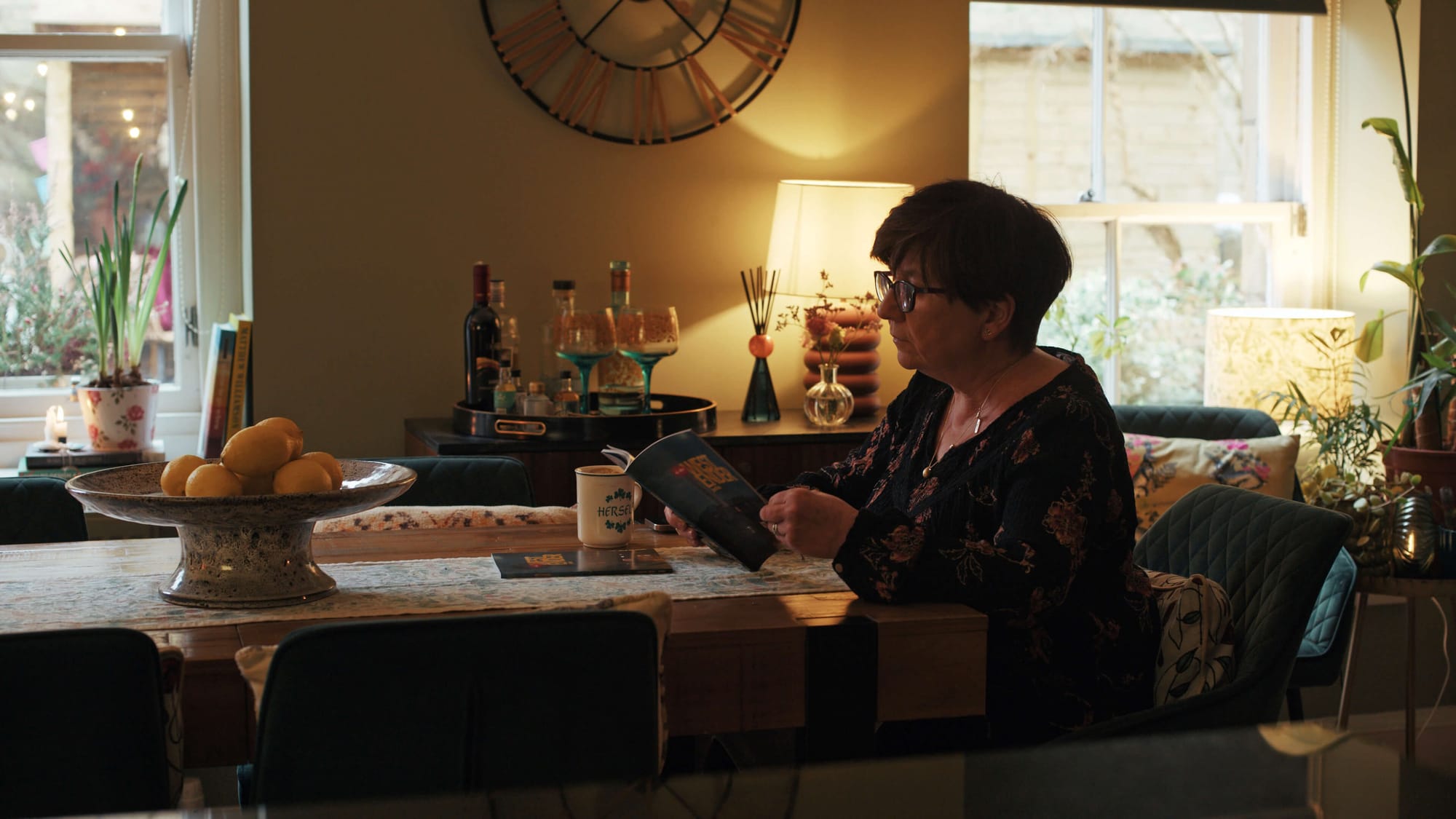
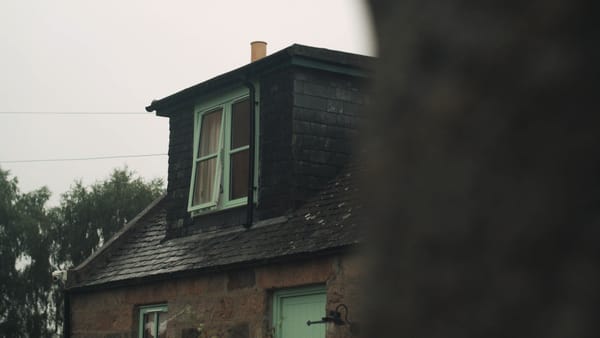
My house is converted servants’ quarters of a Victorian townhouse in the West End of Glasgow. It was built in around 1870. It didn’t have the fancy period features or big banisters or entrance halls, but it’s still very much a Victorian home.
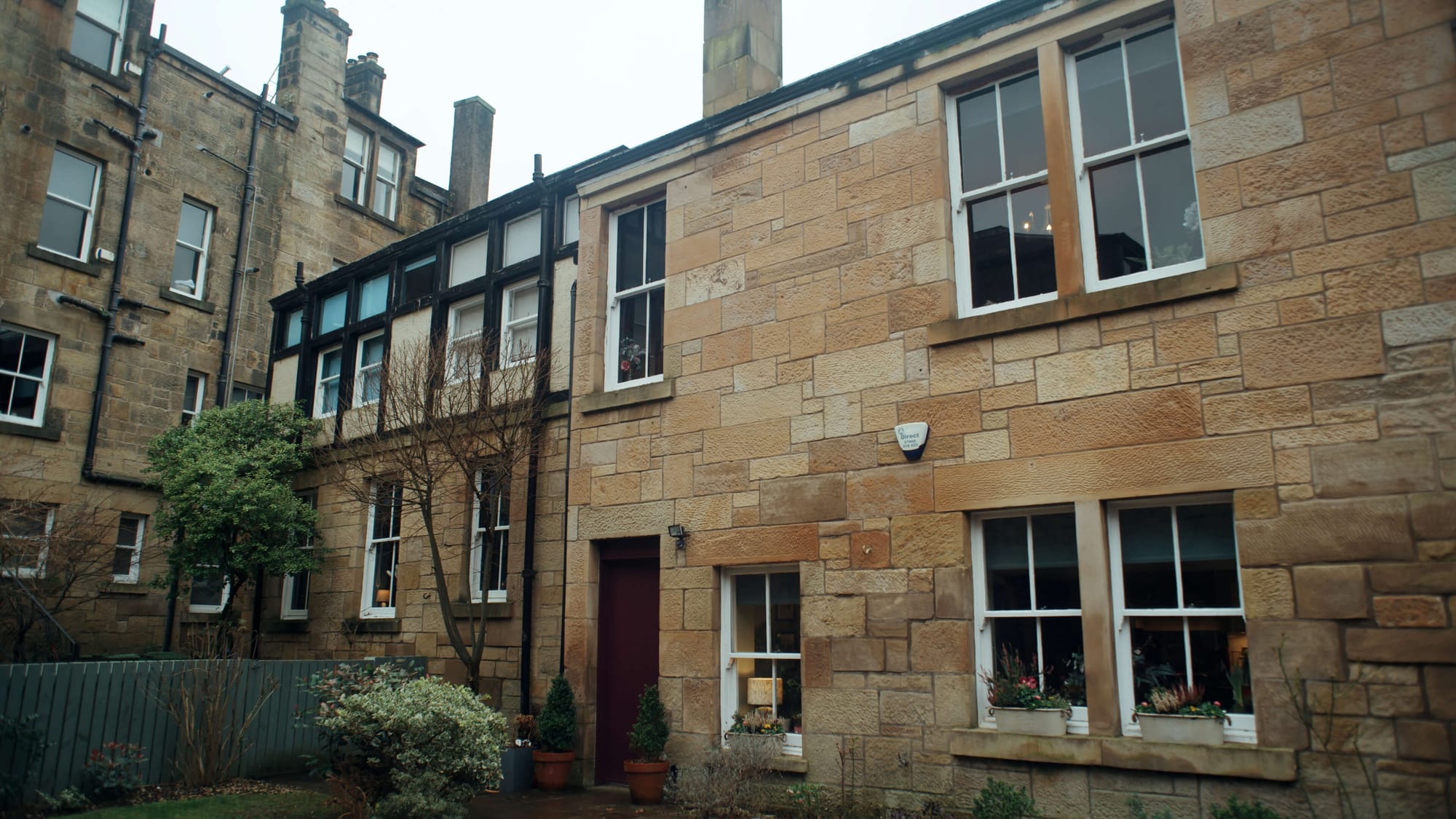
Our building was built for a wealthy Victorian tradesman. The main house is now split into three apartments, each with three bedrooms — so you can imagine how affluent the family who lived there must have been. Our house is where the servants stayed, and I think some of the animals too, in the late 1870s. Later on, chauffeurs lived here. At one point there would have been a bell system so that people from my house could run into the main house and attend to the needs of the wealthy.
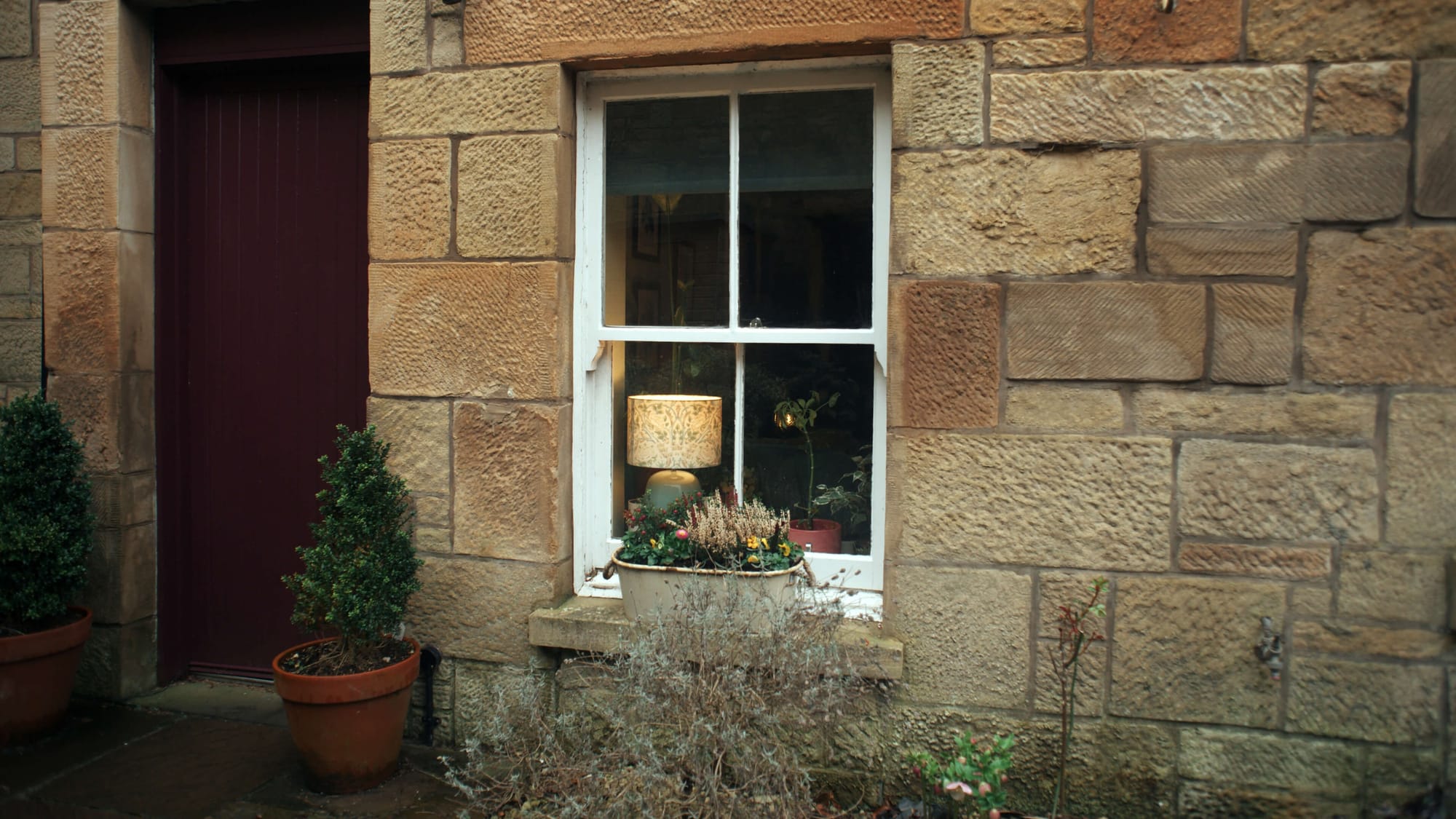
My husband and I have lived here now for eight years. We have a 24-year-old son who has just recently moved out, a daughter who lives very nearby, and Paco, our Labrador.
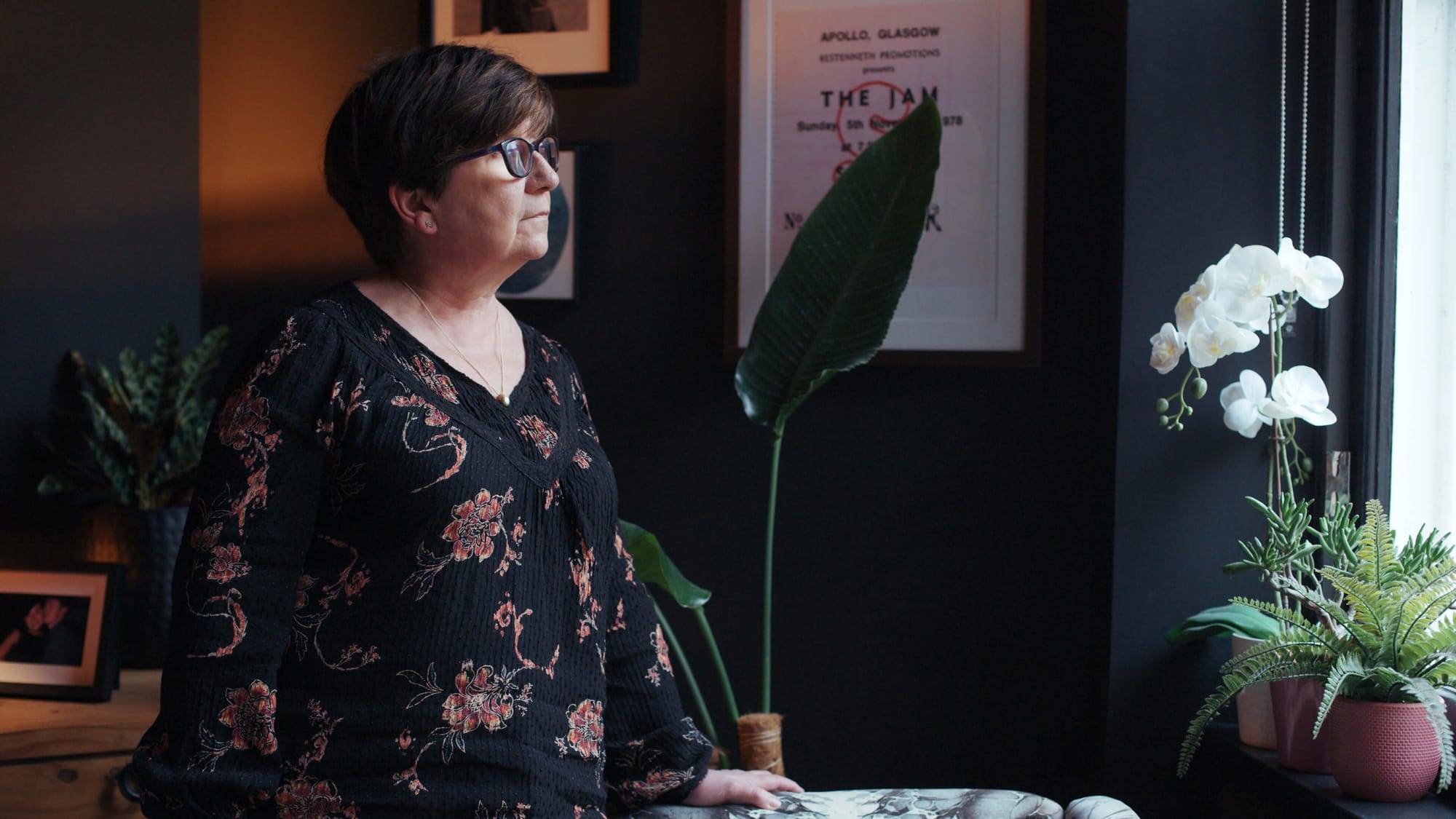
It’s quite hard to describe the layout. When you enter on the ground floor there’s a dining kitchen and a downstairs toilet, but then there’s a small flight of stairs to the living room, and then a large flight of stairs to our bedroom and an ensuite, and then another flight of stairs to two more bedrooms and the family bathroom. So it’s what I would call a quirky house. It’s got an unusual layout, but I think that adds to the character.
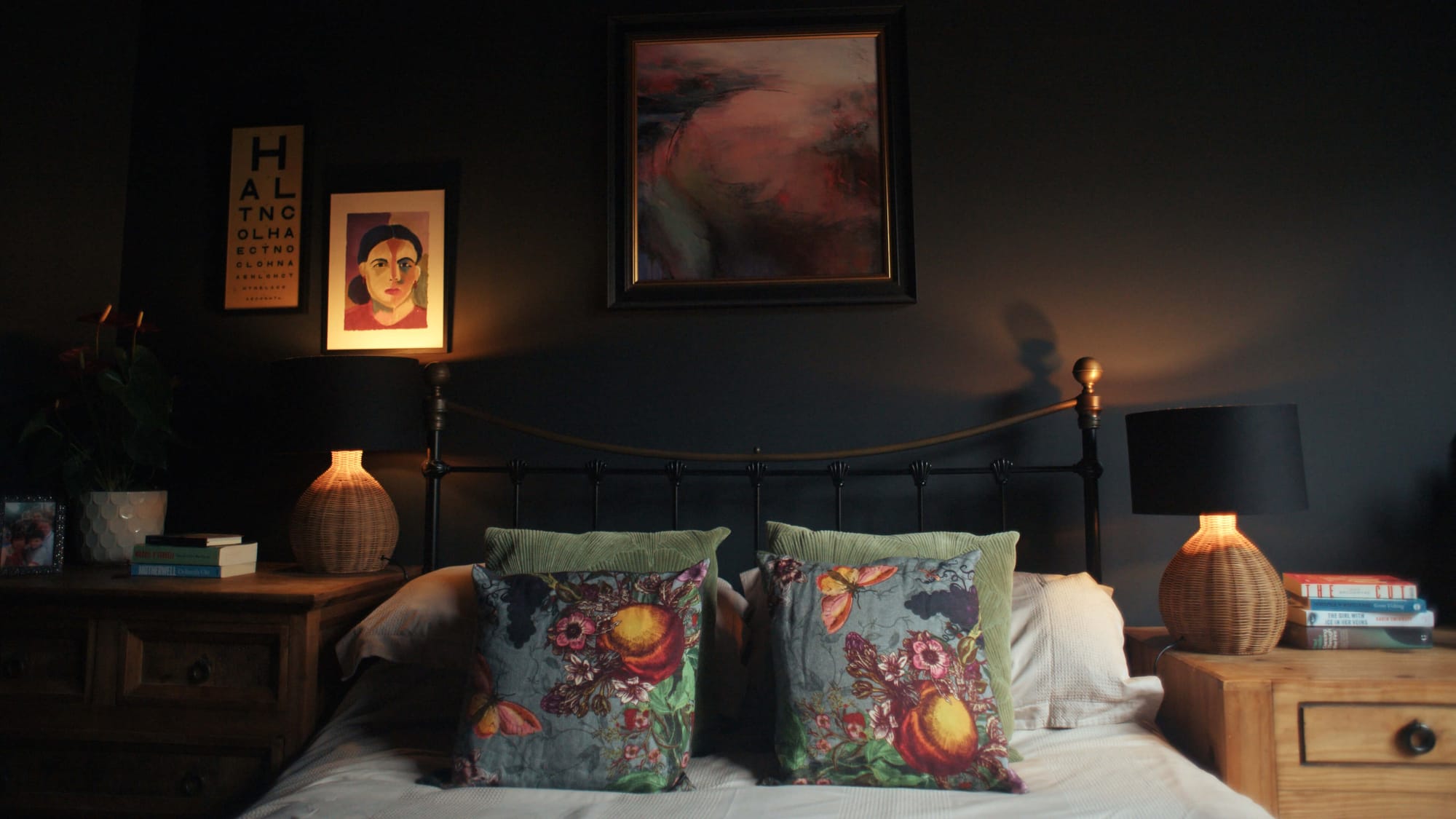
When we moved in, every single room was the same colour. It actually was depressing. I started calling it a sort of dirty magnolia. It probably was a nice colour, but I don’t think it suited this house with the natural light it got and the grey skies we sometimes get in Glasgow.
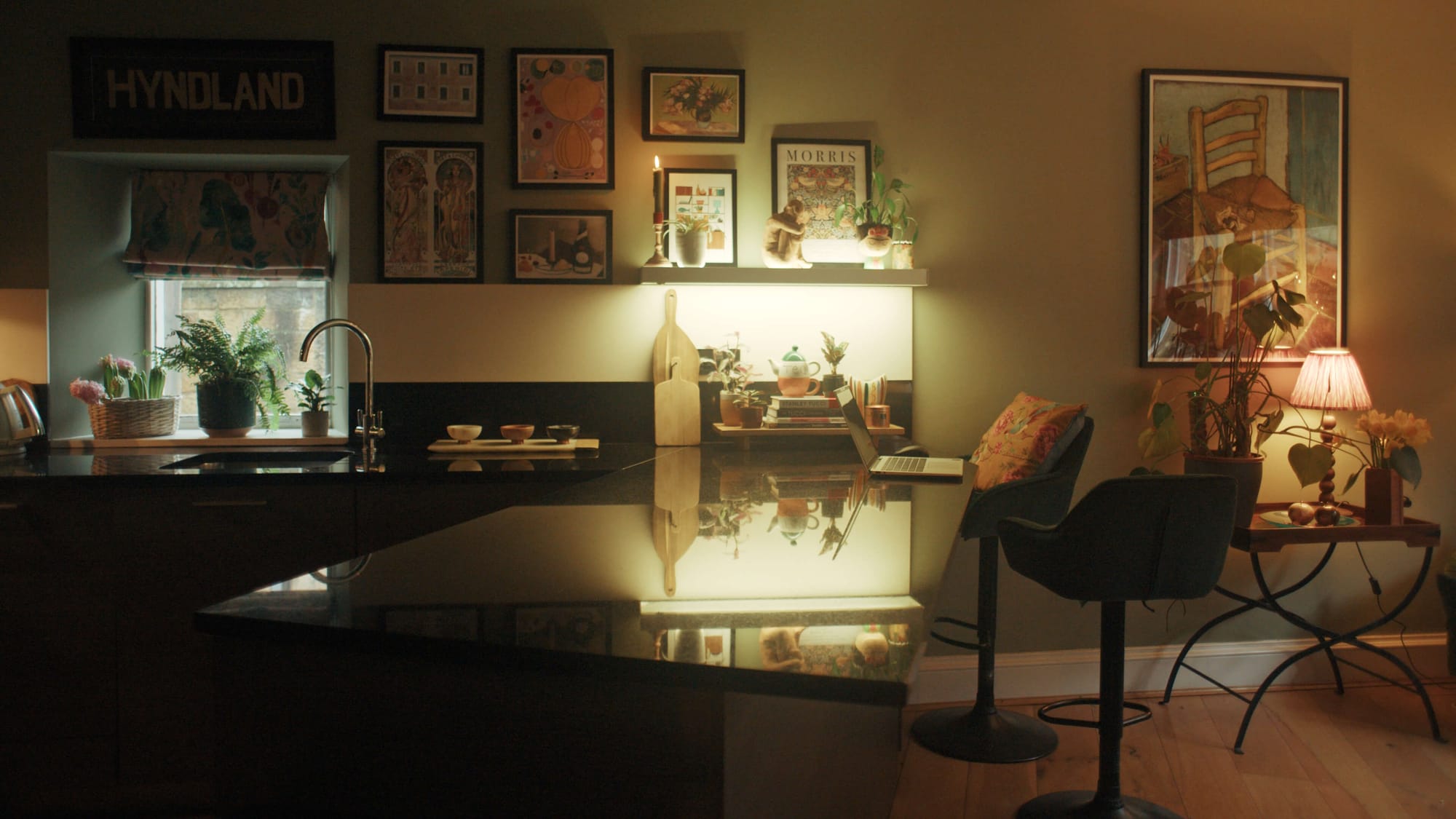
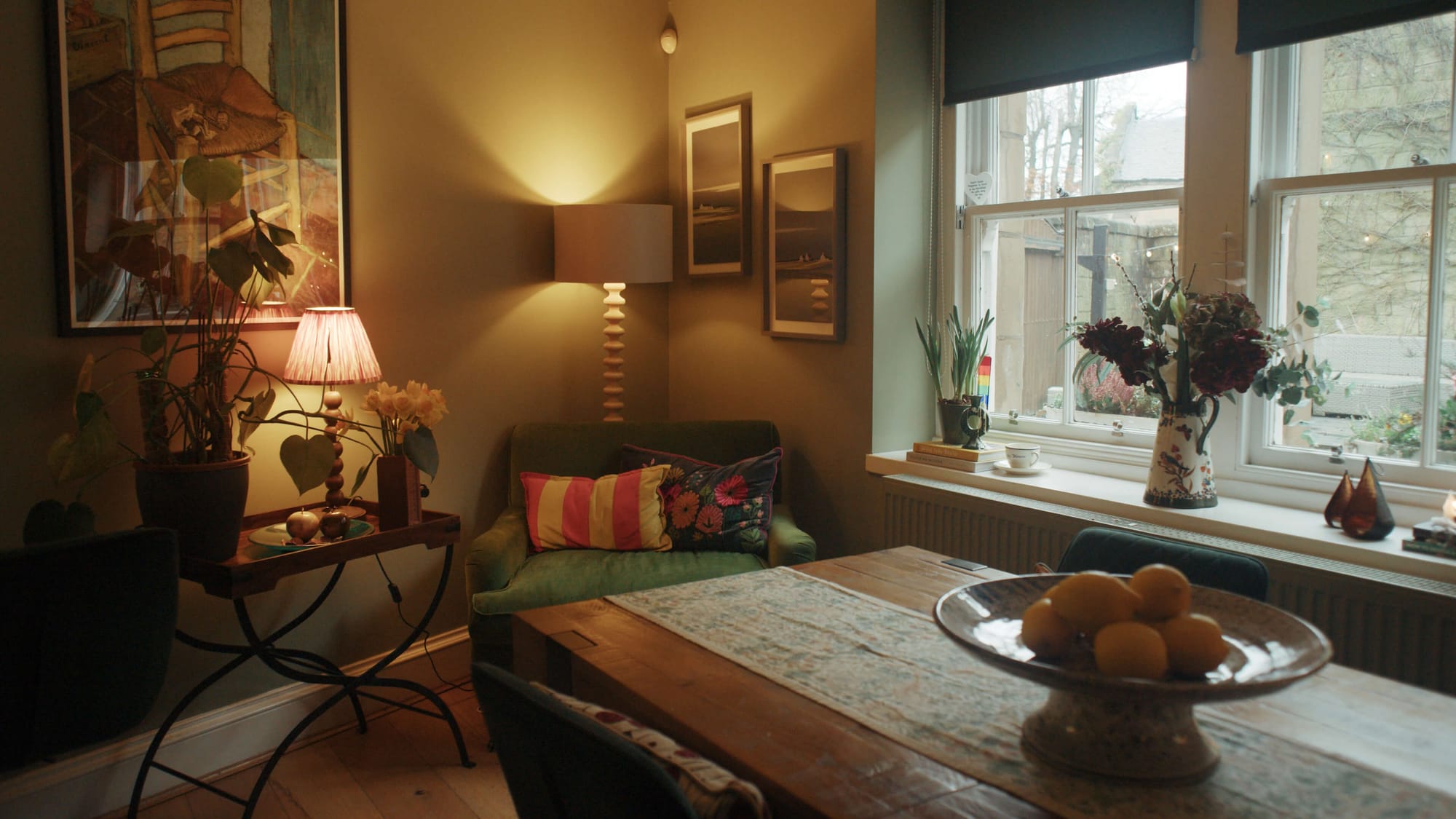
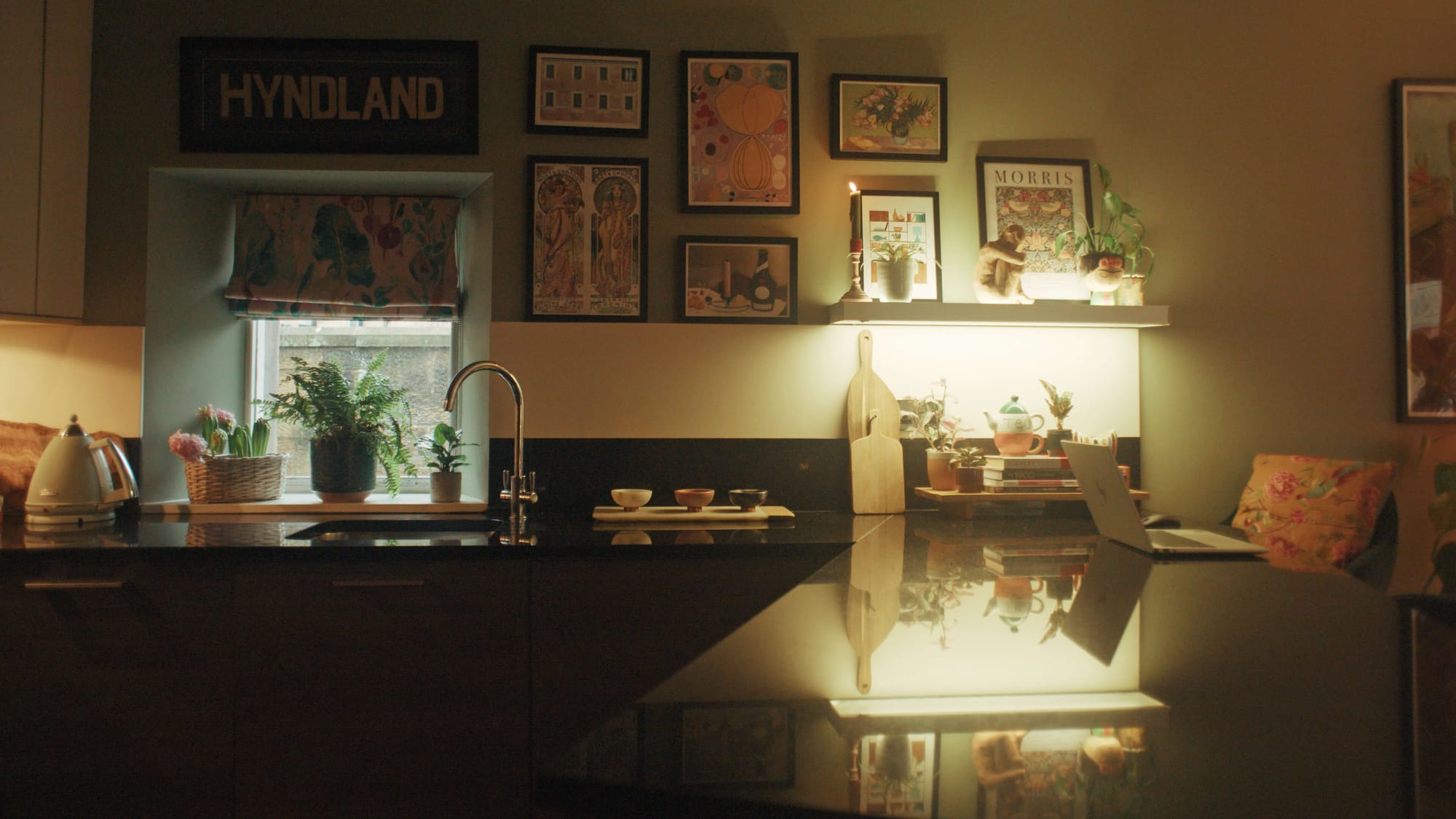
The first room I changed was the dining kitchen. It was very much a kitchen that had a table in it — we don’t have two public rooms, so I wanted the dining area to be a comfortable place where you could sit while someone was cooking or have a chat. It looks out onto the garden, so I decided it should be green, to bring the outside in.
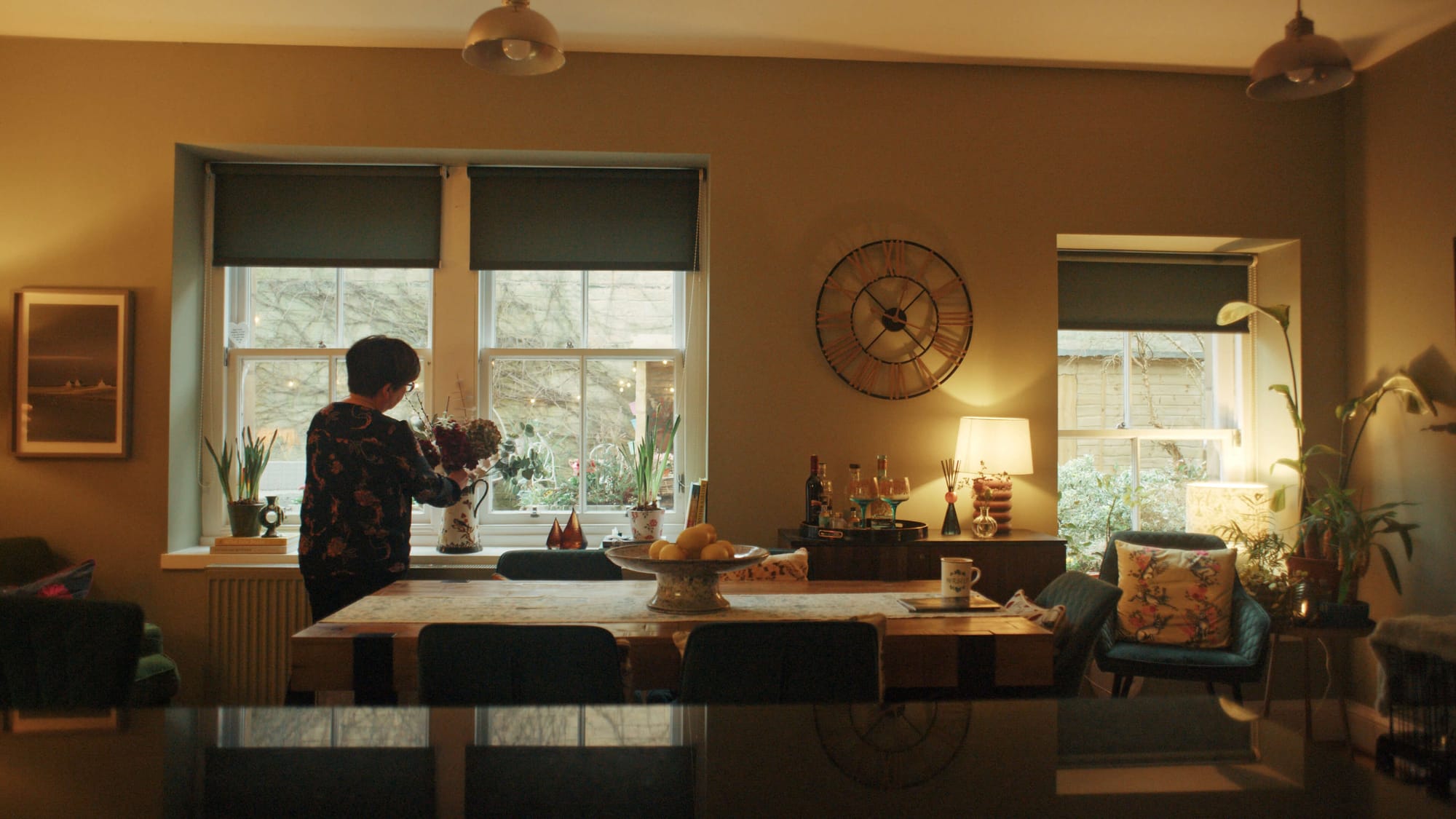
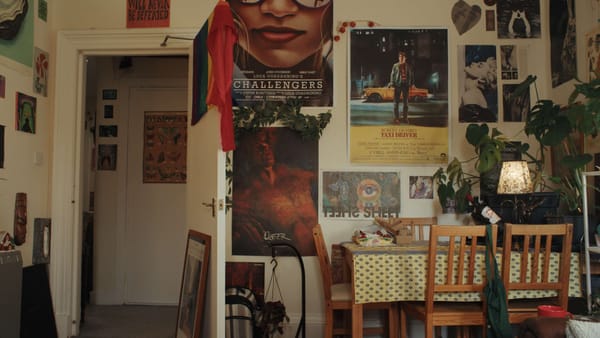
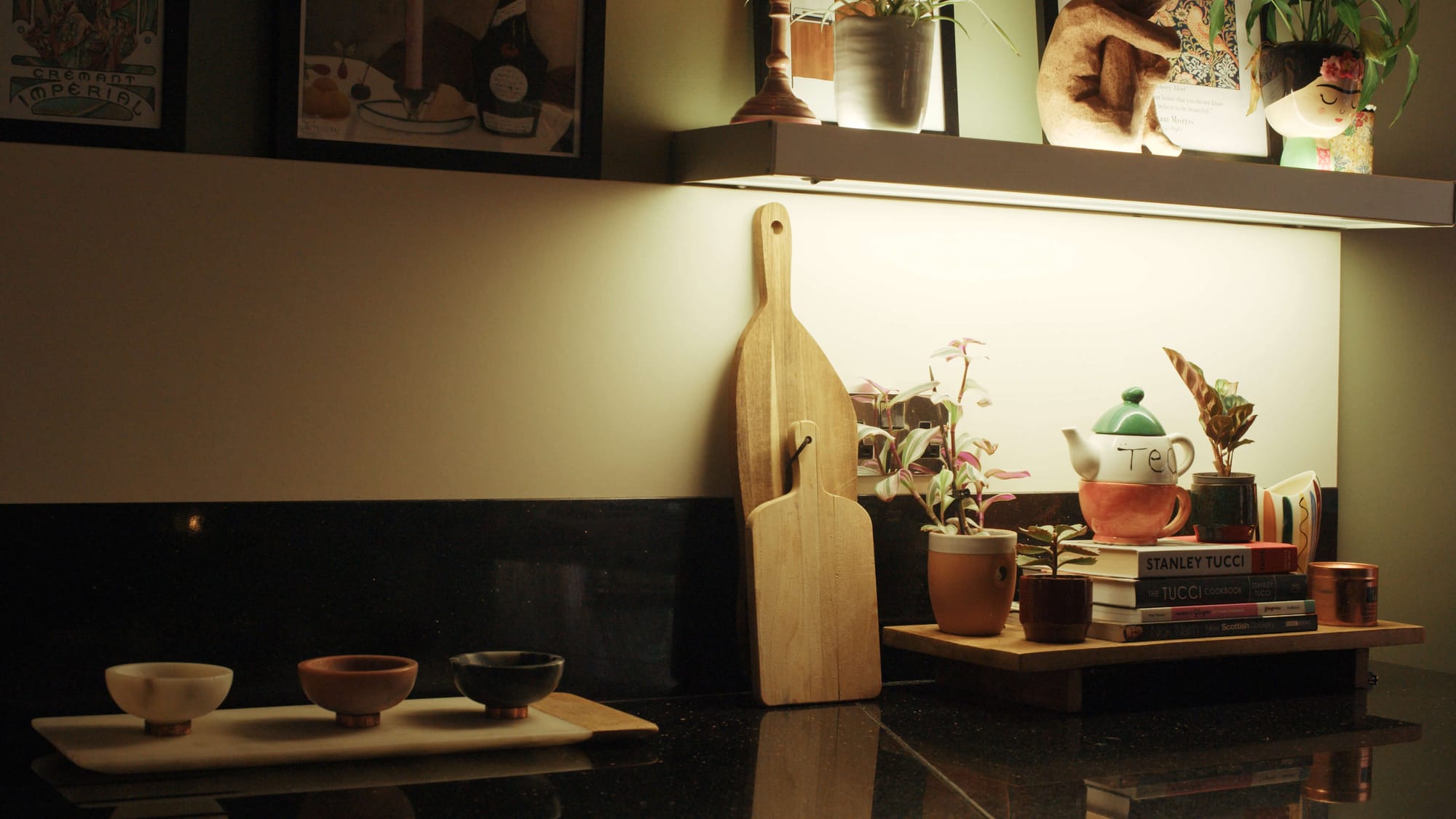
I like to think that my rooms tell a wee bit of a story about us. You get the idea that we enjoy our cooking, that we enjoy relaxing. There are various cookery books, plants, and that wee bit of local heritage.
My favourite spot in the kitchen is definitely my green love seat. I’ve had it in various places in the kitchen, but I think it’s found its home in the corner it’s in now. I enjoy sitting there with a glass of wine while my husband makes dinner.
Up until 2020, I don’t think I really noticed interiors and design and styling for houses. Then, just before Covid, I was diagnosed with stage 3 bowel cancer, which meant that when the world locked down, I was very much locked down. I was shielding, and was to a certain extent confined to my house and garden.
I’m not very good at sitting still and doing nothing, so I started upcycling pieces of furniture and adding colour that way. I found it amazingly cathartic and therapeutic. When I wasn’t well, it was just a fantastic pastime to lose yourself in.
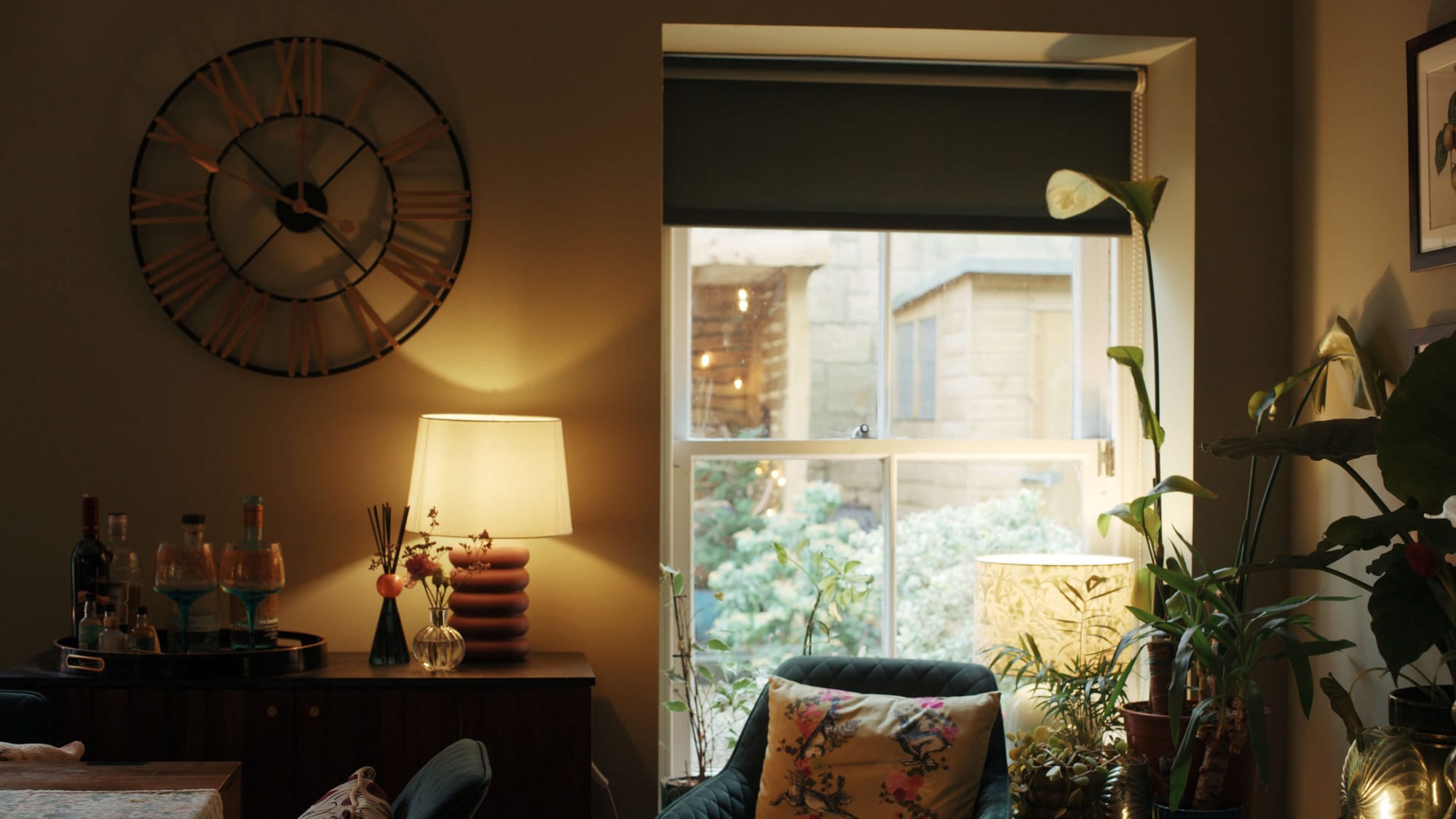
I like the idea of taking old furniture and giving it a new lease of life: keeping its original shape but giving it a modern feel. I’ve done various console tables, bookcases and the bureau in the living room, which was one of the first things I did when I was ill. And the more I experimented with colour in the house, the more it gave me comfort.
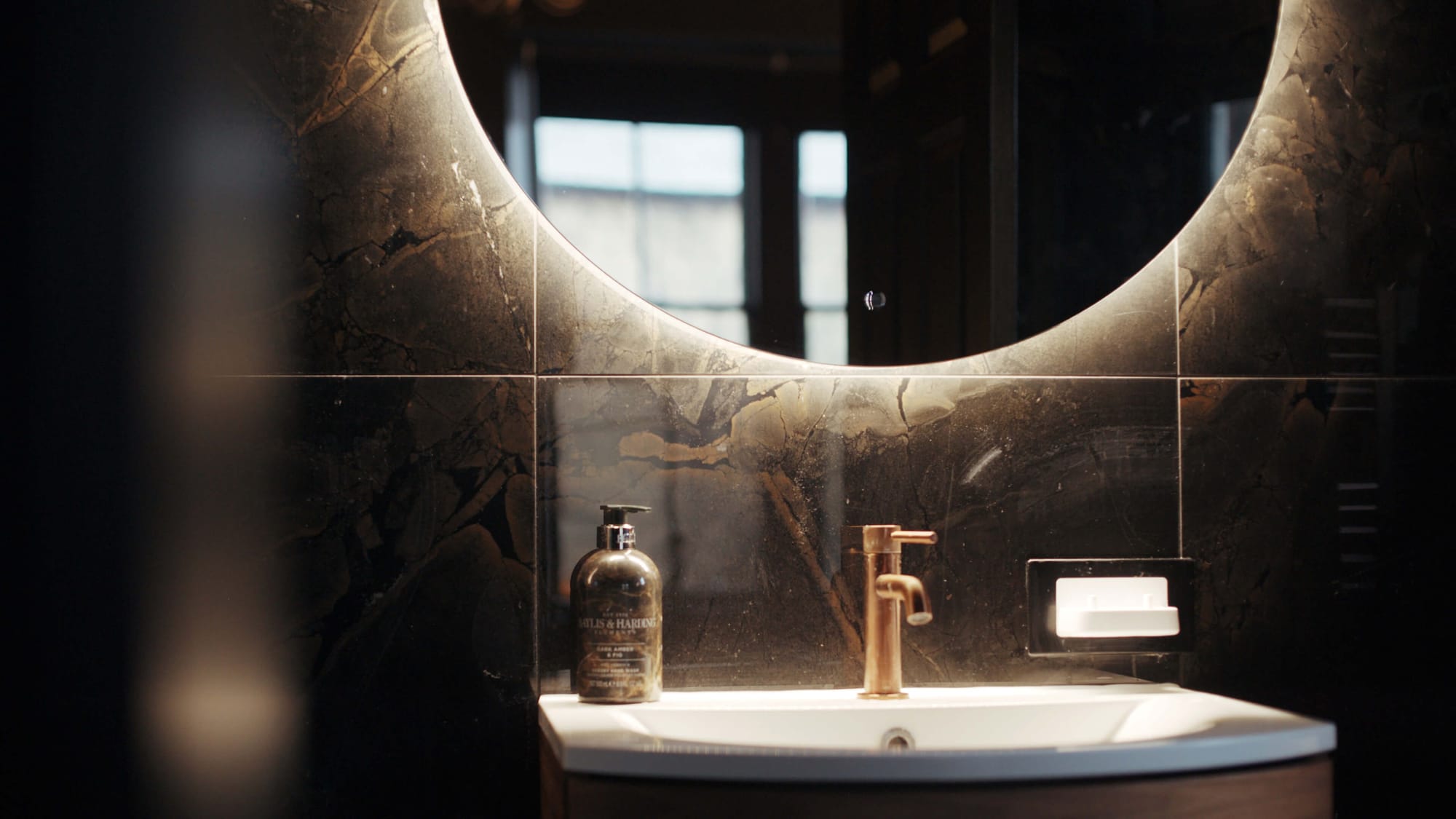
I was on Instagram — which I think we all were because we weren’t out socialising — and I just found myself really being attracted to colour. I realised I wanted to do something for my house, and at the same time wanted to do something for me. The two things happened together. My house became my therapy hobby.
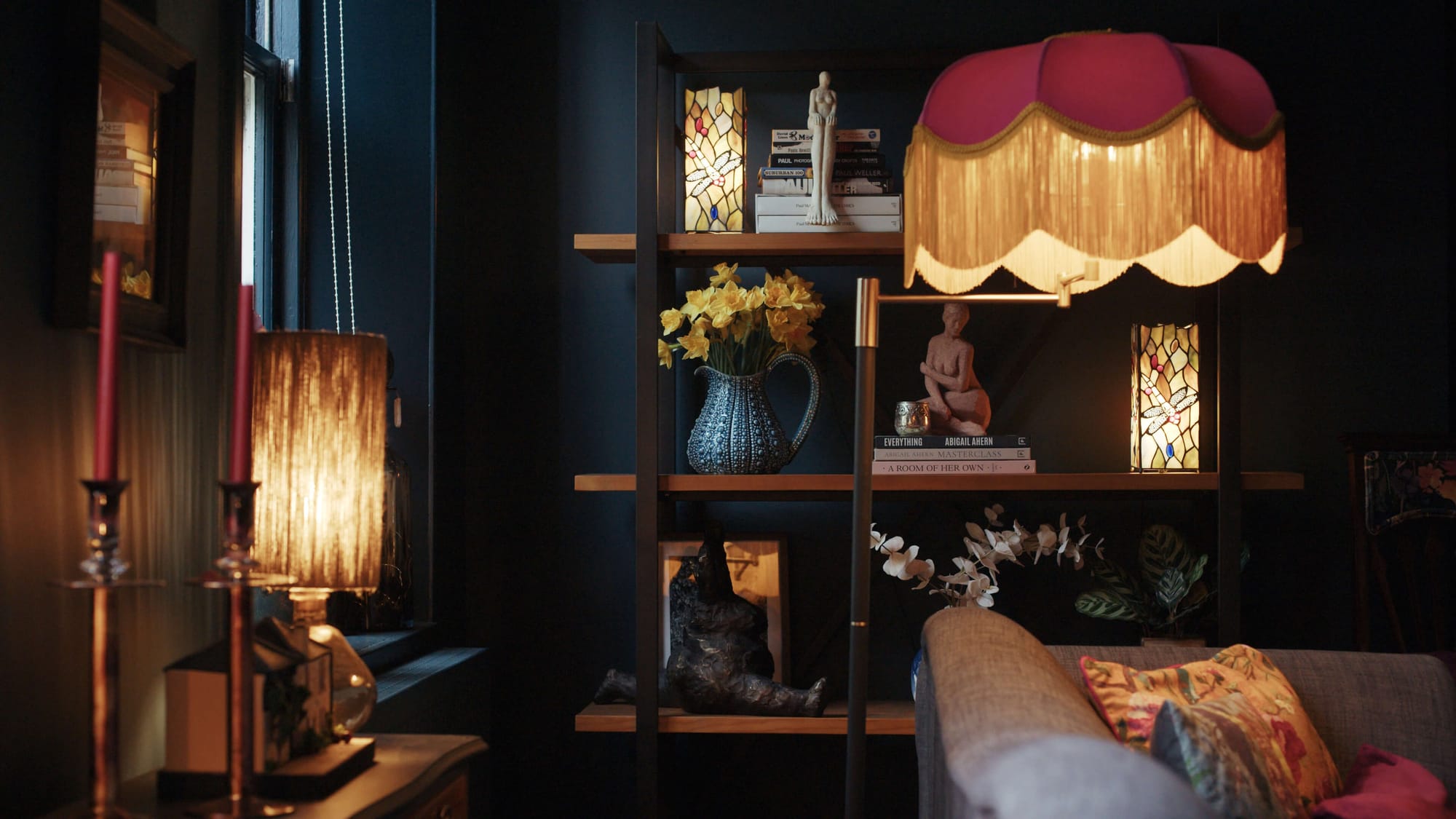
Lockdown House was my safe space. It was the place where I came home to after treatment. It was where I was safe with my family. Lockdown House isn’t a negative thing for me. It’s a good thing.
I mistakenly thought that to deal with the darkness I had to paint everything white. I painted the whole hall white and it looked like a very depressing hospital corridor. So then I realised that actually I really had to embrace the darkness.
I love to bring old things into the room. I have a tram sign from Hyndland — an original tram sign I acquired at a market in Glasgow.
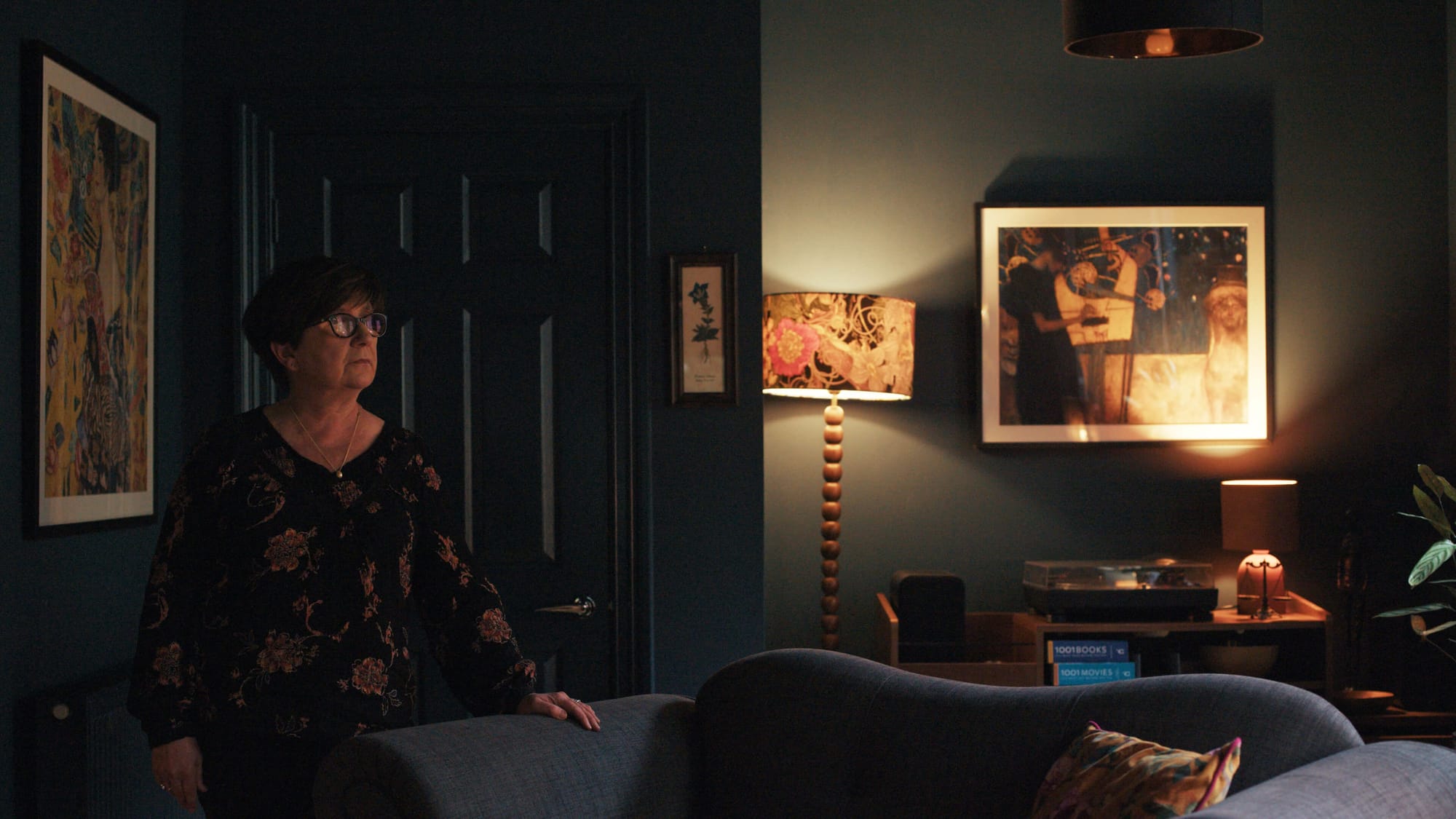
When I realised I was going to be bold and painted the living room in Hague Blue, I genuinely felt slightly terrified. Initially it was just the walls. But then I decided to colour-drench it — to make the whole room the same colour: the ceiling, the doors, the windows, the woodwork, all in Hague Blue. But when it was finished I did have that moment of thinking: now I’ve done something I’m really proud of, something really special.
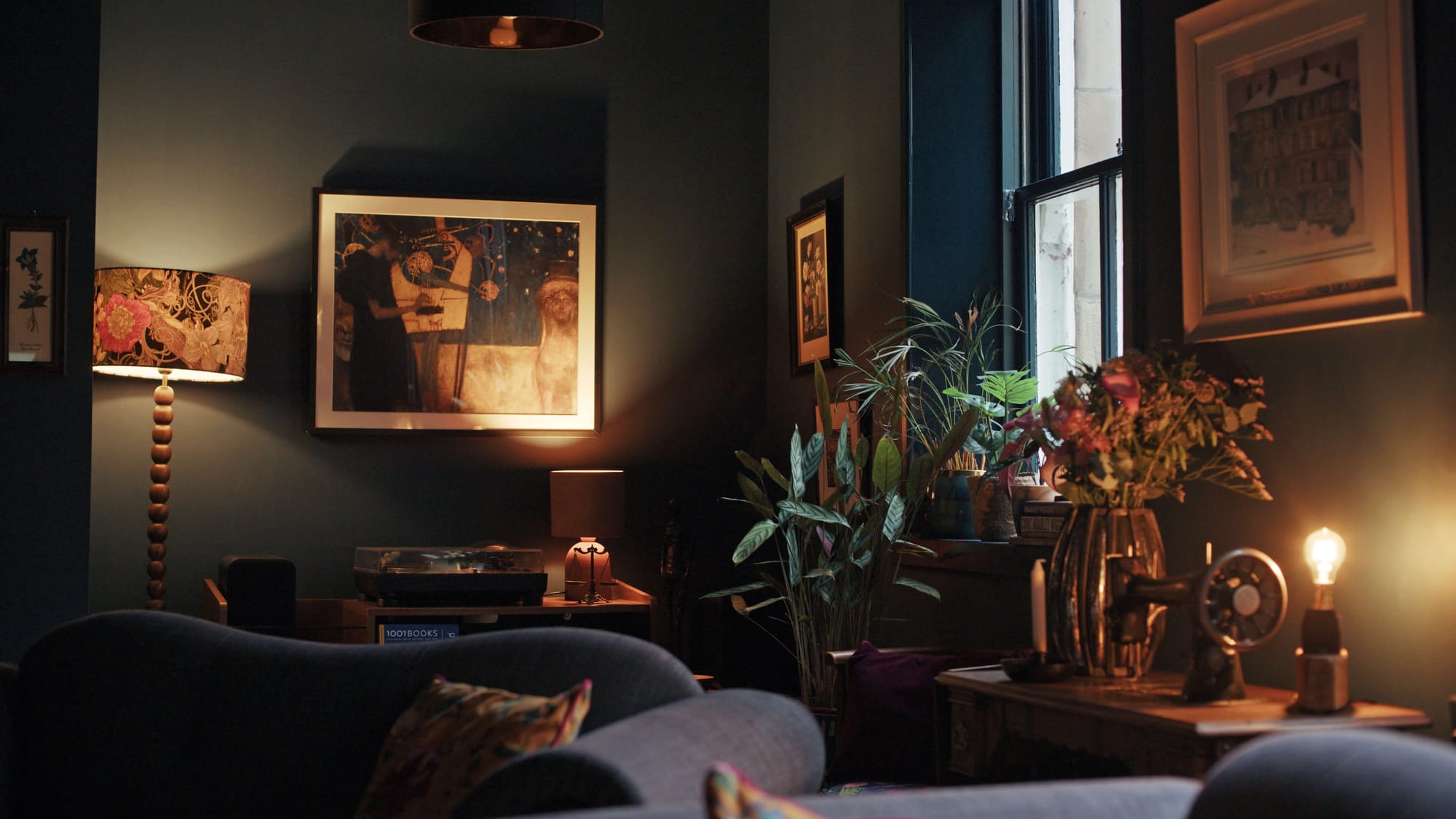
My husband said to me, “We live in a boutique hotel.” We enjoy our holidays, so that idea of living somewhere that looked and felt like a boutique hotel was quite a nice one — and I’ve stayed with that. As I’ve done different rooms, boutique hotel has become my brief.
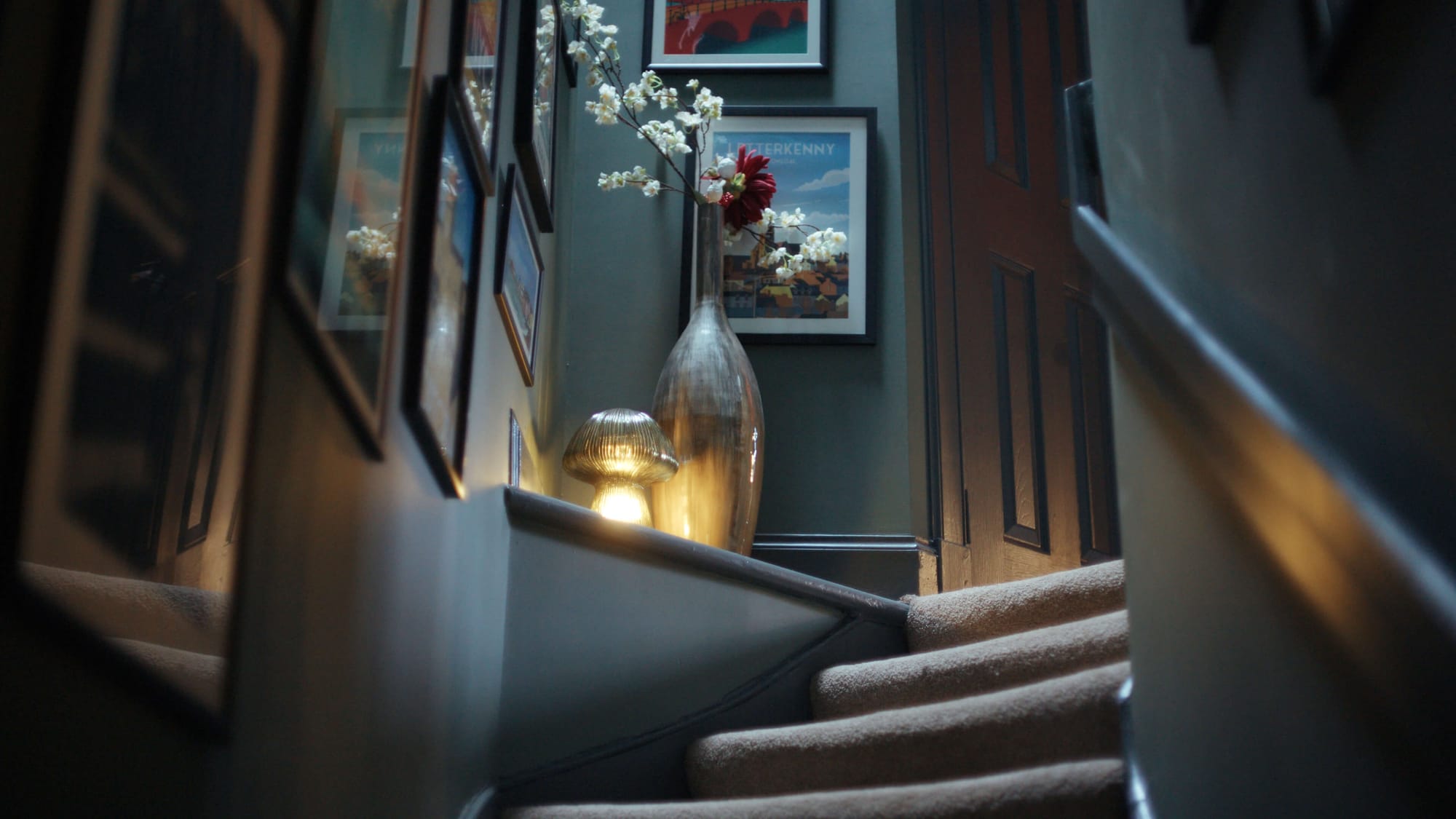
Before 2020, I didn’t know shelf styling was even a thing that existed. The power of Instagram gave me a lot of insight into it. People use stacks of books in different ways: to elevate ornaments, to elevate a plant, to create height and depth. I’ve studied people styling shelves and it is genuinely an art form. I’m still learning, but that was very much Instagram-influenced.
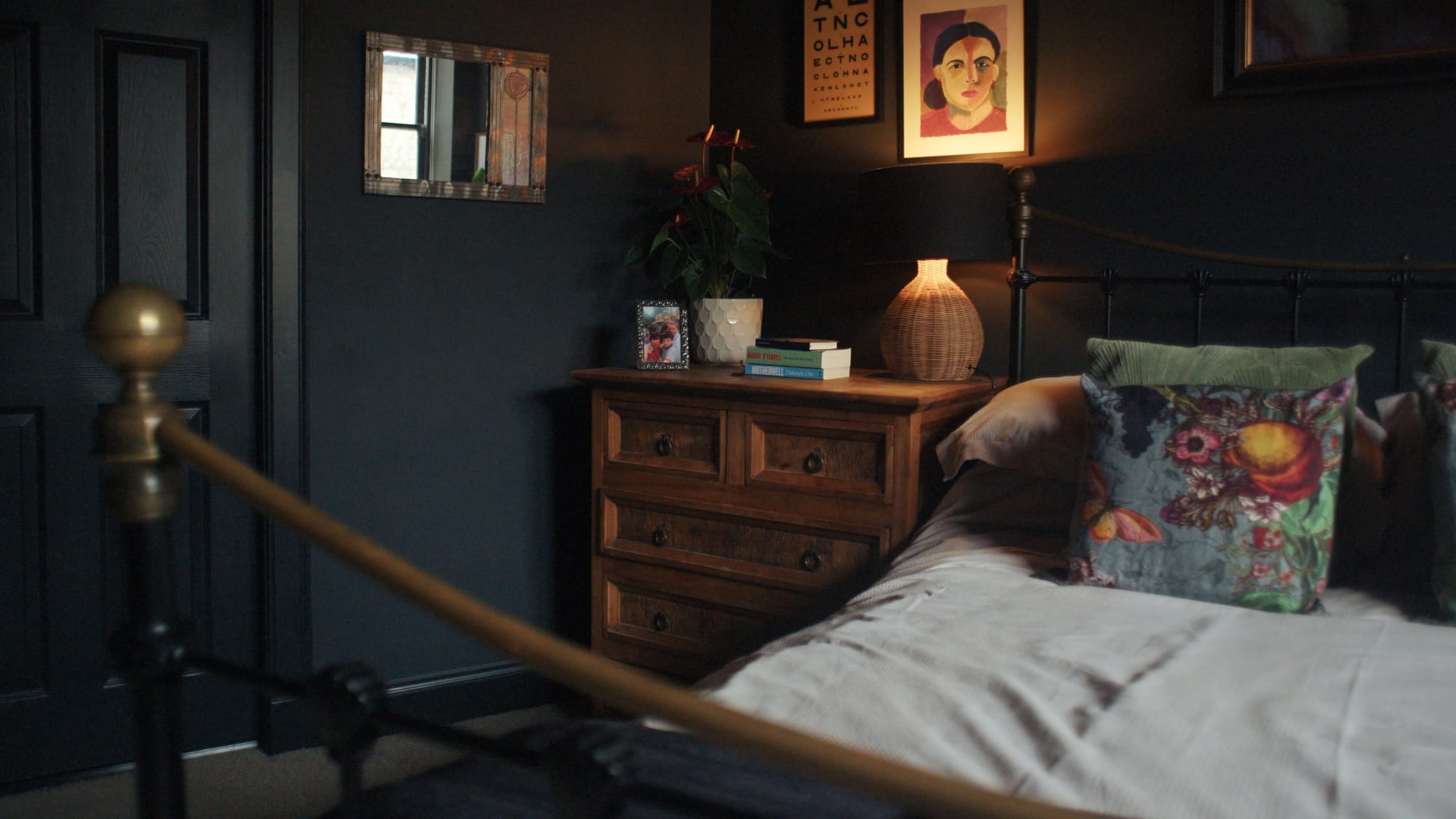
I love the way the colour looks different in different lights. The ceiling is exactly the same colour as the walls, but it looks different from the room. It’s so comfortable, it feels so warm, it suits every sort of weather. When it’s dark, you light candles and you have lamps.
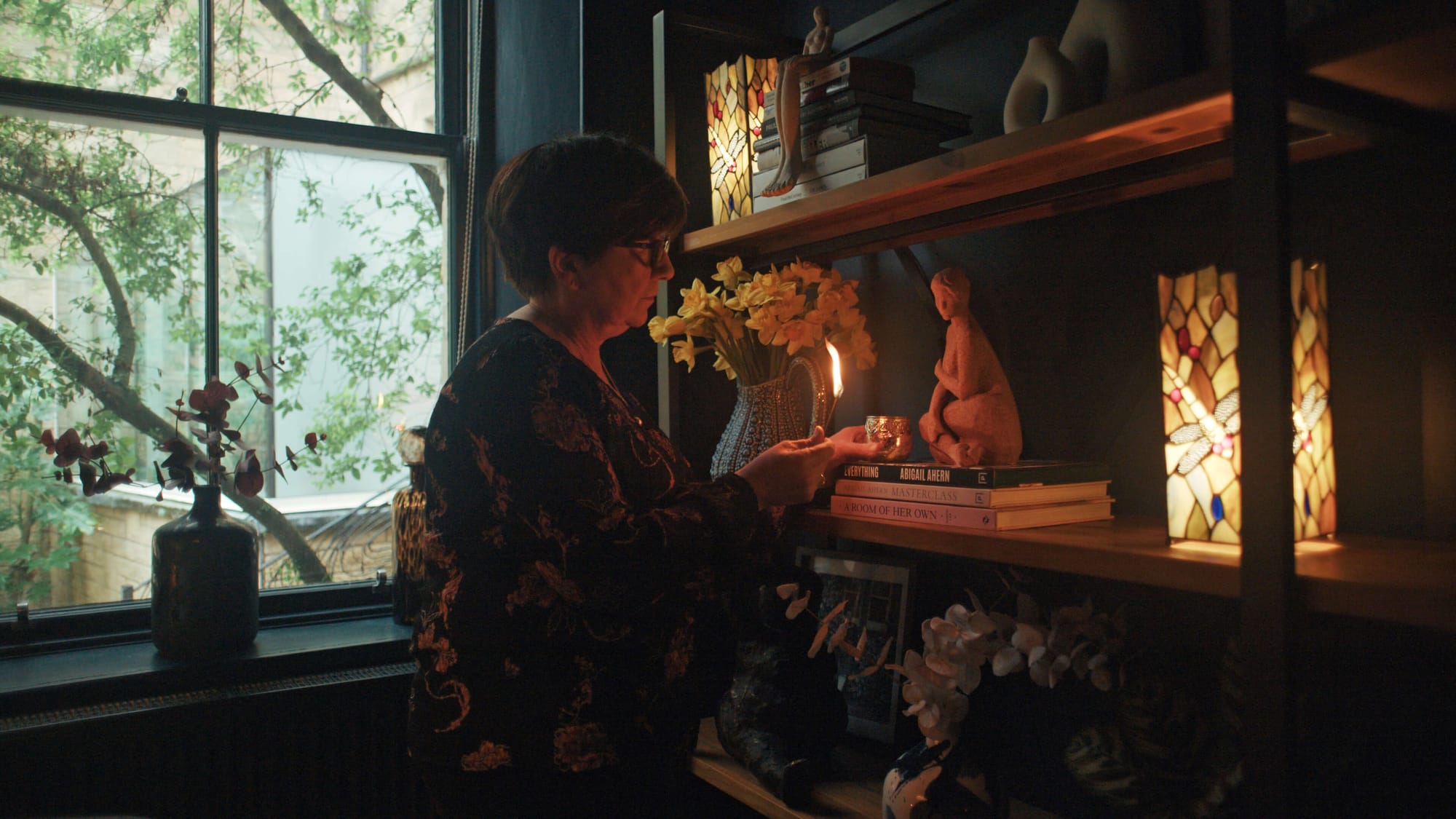
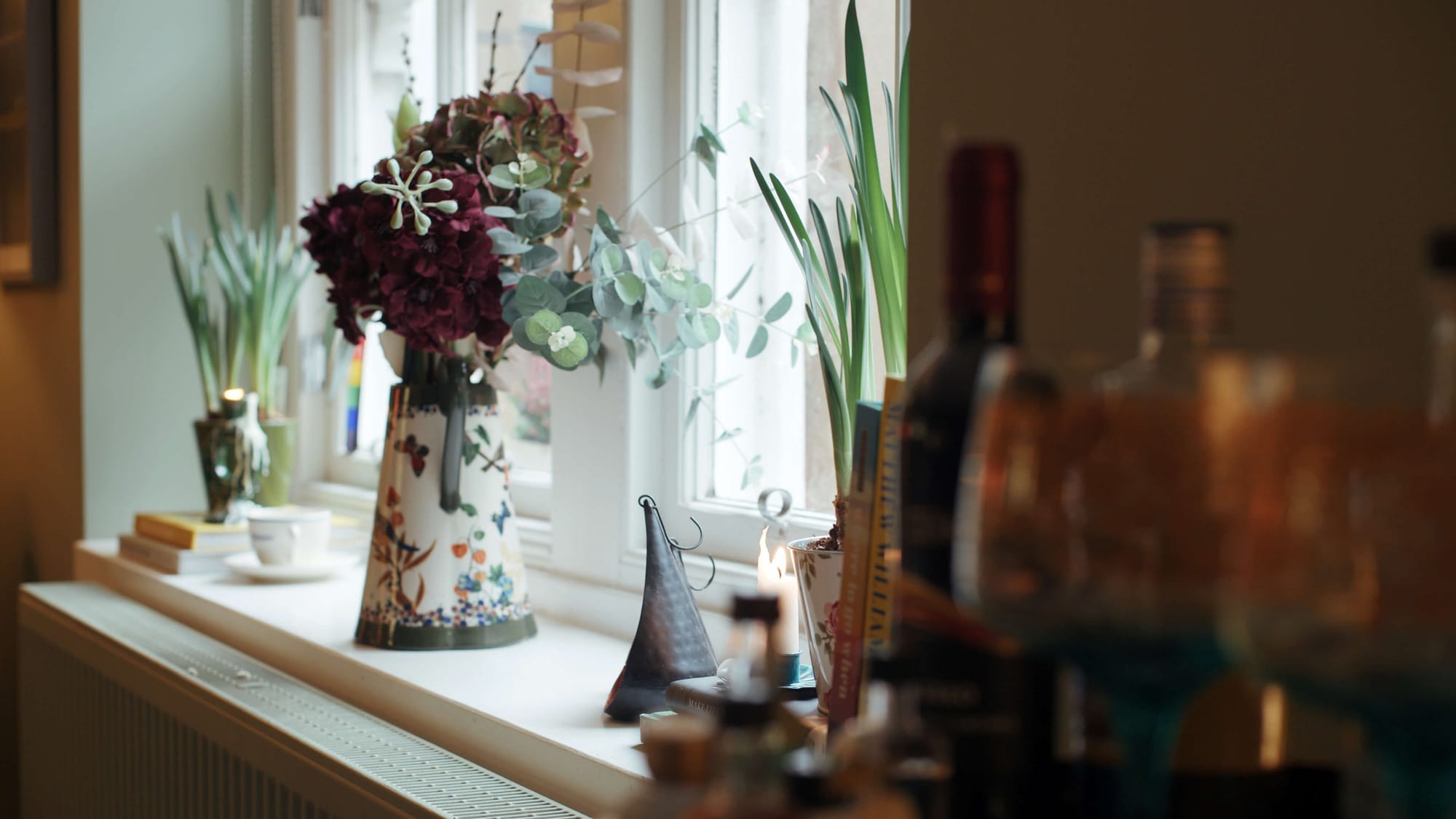
I think I have an obsession with candles. All shapes and sizes. It complements that idea of the decor being cosy and cocooning. I have candlelight throughout the year.
I lit scented candles for the filming even though you can’t get the scent on film. But it’s important to me that my house smells nice when people visit. I have a plum and rhubarb scent burning almost constantly just now.
Nostalgia means to me the idea of remembering people, places, or memories that were really important to you. In this house, the Singer sewing machine table makes me think of my late dad. I also have, in my travel prints, the town he was born in in Ireland — a place my husband and I visited together. I have the bureau, which is an older item. I have little antique memorabilia: the small ceramic shoe I use as a match striker was made in Glasgow.